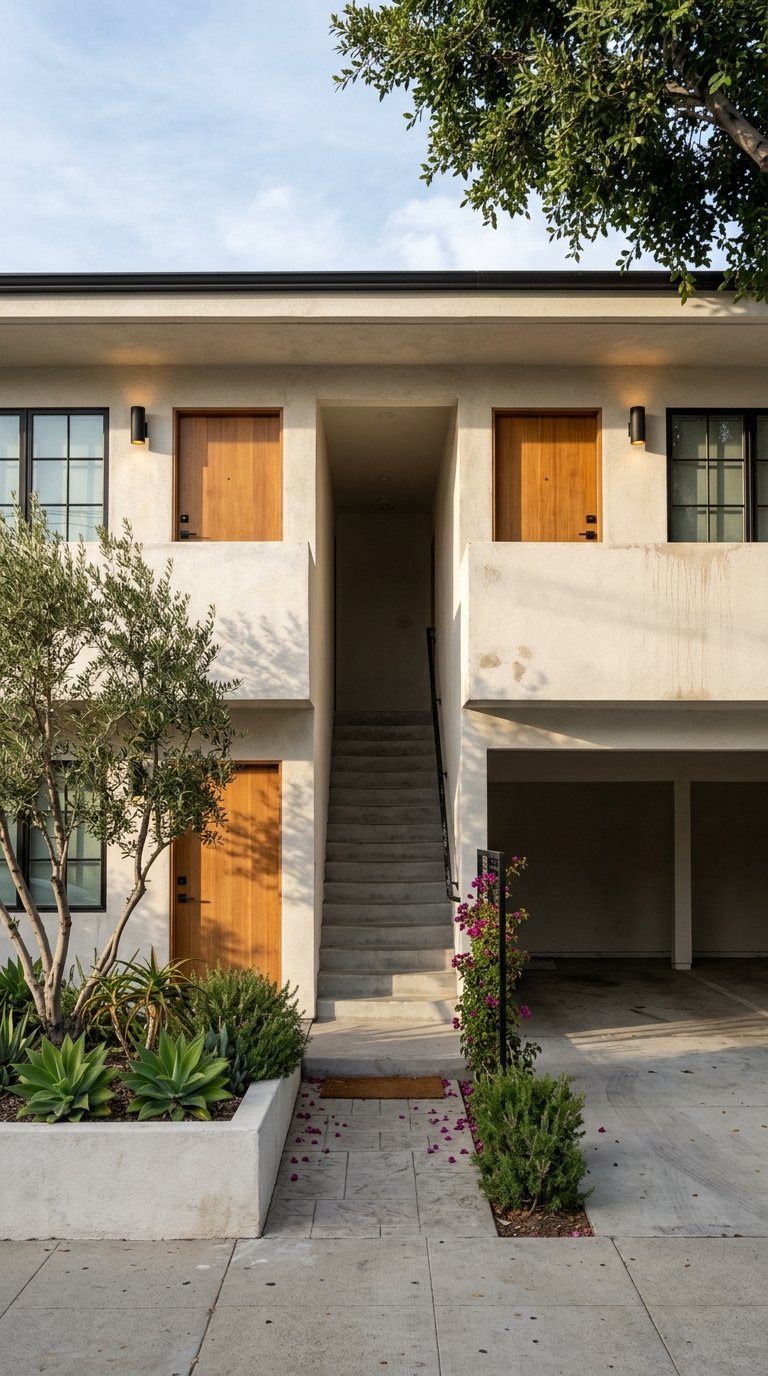
If you are looking at Echo Park for a small multifamily purchase, the appeal is easy to see. The neighborhood has a large renter base, a limited number of homes for sale, and a building stock that often includes duplexes, fourplexes, bungalow courts, and other low-rise properties with real long-term hold potential. At the same time, Echo Park is not a market where you want to rely on loose assumptions. The numbers, the lot, and the rules all matter here. Let’s dive in.
Why Echo Park draws investors
Echo Park sits within the Silver Lake, Echo Park, and Elysian Valley planning area, where City Planning reports 31,994 dwelling units, 61.9% multiple-housing units, and 67.1% renter-occupied units. The same profile shows a median household income of $96,912, along with smaller average household sizes. You can review those area demographics in the City Planning profile for the Silver Lake planning area.
For an investor, that points to a market structurally built for rental housing. It supports a patient, long-term strategy more than a quick flip story. If your goal is to hold quality units in a supply-constrained central LA neighborhood, Echo Park can fit that thesis well.
Current market data also reinforce the supply side of the story. As of March 31, 2026, Zillow estimated Echo Park’s average home value at $1,076,517, with only 46 for-sale listings and 14 new listings reported at that time, according to Echo Park home value data from Zillow.
That does not automatically make every deal a good deal. It does mean buyers need to underwrite carefully in a neighborhood where available inventory can stay limited.
Rent demand looks durable
Echo Park’s household profile suggests a practical fit for smaller units. City Planning reports that 38.3% of households are one-person households, 35.1% are two-person households, and 83.0% of households have no children under 18 in the broader planning area, based on the same City Planning demographic profile.
That matters when you evaluate unit mix. In many Echo Park properties, studios, one-bedrooms, and smaller two-bedrooms may align better with local household patterns than larger layouts. It is a useful lens when you compare rent potential, renovation scope, and tenant demand.
The broader rental market still needs a measured approach. Zillow’s cited market summary notes Zumper reporting a median rent of $2,500 in Greater Echo Park Elysian in April 2026, with apartment rents averaging $2,396, house rents averaging $4,725, and overall rents down 4% year over year in that broader rental market. That is why smart underwriting here should be conservative.
Expect older, character-rich buildings
One of Echo Park’s strengths is also one of its biggest investing challenges. Los Angeles City Planning’s historic multifamily context identifies common small-scale property types such as duplexes, four-flats, bungalow courts, courtyard apartments, and apartment buildings in central-city neighborhoods like this one. You can see that framework in the Citywide Historic Context Statement for multifamily residential development.
That means the deal set is often more nuanced than a standard suburban income property. Older low-rise buildings can offer character, layout flexibility, and strong location value, but they can also come with slope issues, awkward access, limited parking, deferred maintenance, and tighter improvement options.
A good Echo Park underwriting mindset is simple: underwrite the parcel, not just the unit count. Bedroom count matters, but lot shape, grade, setbacks, parking layout, drainage, and access can all affect long-term value and your business plan.
Hillside lots can change the math
Echo Park’s physical layout can make a property more complex than it first appears. A good example is the historic Stires Staircase Bungalow Court nomination, which describes a 1922 property on a steep sloped site with ten bungalows arranged around a central staircase and no driveways or garages.
That example does not define every property in the neighborhood, but it illustrates a real local pattern. In Echo Park, parking and access are not always problems you can solve with a simple sketch and a contractor bid. Sometimes the lot and the existing layout set hard limits on what is practical.
This is one reason I like to slow the process down before an offer is written. If your value-add thesis depends on adding parking, reworking circulation, or expanding utility areas, you need to confirm feasibility early.
Rent control is central to the deal
If you are buying small multifamily in Echo Park, regulation is not a side issue. It is one of the main drivers of your underwriting.
According to the Los Angeles Housing Department’s overview of the Rent Stabilization Ordinance, the City of Los Angeles RSO generally covers rental properties first built on or before October 1, 1978. LAHD says the ordinance can apply to apartments, condominiums, townhomes, duplexes, ADUs, JADUs, two or more single-family units on the same parcel, and attached residential units.
LAHD’s RSO rent increase calculator shows a 3% annual allowable increase for RSO units from July 1, 2025 through June 30, 2026. For many non-RSO properties, California’s Tenant Protection Act, AB 1482, generally limits annual increases to 5% plus CPI or 10% total, whichever is lower, based on the LAHD guidance cited in its RSO registration materials.
The practical takeaway is clear. You should not assume you can buy an occupied building, do light cosmetic work, and immediately push every unit to top-of-market rent. In Echo Park, upside often comes from a more disciplined mix of legal rent growth, turnover planning, compliance, and targeted improvements.
Registration and compliance matter
For RSO-covered properties, LAHD says owners must register annually before they can legally demand or accept rent. Registration requires annual fees plus rent and tenancy information for each unit, as outlined in the LAHD rental property registration guidance.
That makes document review essential. A clean rent roll alone is not enough. You want to verify registration history, current tenancy status, lease terms, utility responsibility, and whether the numbers in the marketing package match the legal and operational reality.
This is where a calm, analytical process helps. A deal can still work, but only if you know exactly what you are buying.
Design overlay can affect plans
Some Echo Park properties may also fall within the Echo Park Community Design Overlay. That matters because exterior changes, additions, and parking-related work may face added design standards and review requirements.
If your investment plan depends on visible exterior upgrades, site reconfiguration, or adding parking, this is worth checking before you get too far down the road. The goal is not to overcomplicate the process. It is to avoid writing an offer based on a business plan that may be harder to execute than expected.
Best value-add angles in Echo Park
In this neighborhood, the cleanest upside is often the least flashy. Thoughtful, code-compliant improvements can strengthen the asset without building your numbers around aggressive assumptions.
Here are the value-add angles that tend to fit Echo Park best:
- Interior refreshes such as paint, flooring, lighting, and updated finishes
- Kitchen and bath improvements that improve function and presentation
- Common-area cleanup that makes older properties feel better maintained
- Deferred maintenance work that protects the hold and supports financing or insurance stability
- Parking improvements, but only when the lot, access, and permit path clearly support them
The key is discipline. You want improvements that raise quality and protect long-term value within the property’s actual regulatory and physical limits.
Echo Park offer checklist
Before you write on a small multifamily property in Echo Park, I would strongly encourage you to work through these questions:
- Confirm the year built and certificate of occupancy
- Verify whether the property is RSO-covered, exempt, or partially exempt using the LAHD RSO guidance
- Review the rent roll, lease terms, utility responsibility, and registration status for each unit
- Check whether the parcel is in the Echo Park Community Design Overlay or has any historic designation
- Confirm legal parking count, access, slope, drainage, and site constraints
- Underwrite legal rent growth using the current RSO increase rules, not optimistic market-rent assumptions
- Ask whether there are open code cases, habitability issues, or deferred maintenance items that could affect financing, insurance, or your hold period
That checklist can save you from the most common underwriting mistakes. In a neighborhood like Echo Park, the deals that perform best over time are usually the ones bought with the clearest eyes.
Questions to ask before you commit
Every Echo Park multifamily deal should come with a few direct questions:
- Is the property rent stabilized, exempt, or partly exempt?
- When was the last lawful registration filed?
- Are any fees delinquent?
- Which improvements are realistic without major permit work?
- Is the parking legal, nonconforming, or potentially expandable?
- What is the real rent path if units stay occupied versus turn over?
- Are there open violations, structural issues, or past insurance claims?
These are not small details. They shape your purchase price, renovation plan, and exit options.
Final thoughts on Echo Park investing
Echo Park can be a compelling place to buy small multifamily if your strategy is steady, analytical, and long-term. The neighborhood has a strong renter base, older low-rise building stock, and limited for-sale inventory, but it also demands discipline around rent rules, site constraints, and pre-offer diligence.
If you want to invest here well, the goal is not just to find a property with upside. It is to find a property where the upside is realistic, legal, and durable. If you want help screening Echo Park small multifamily opportunities with a calm, numbers-driven lens, connect with Ravi Sharma for a free consultation.
FAQs
What makes Echo Park attractive for small multifamily investing?
- Echo Park has a high share of renter-occupied housing, a large share of multifamily units, and limited for-sale inventory, which can support a long-term rental strategy.
What property types are common in Echo Park small multifamily investing?
- Buyers may see duplexes, fourplexes, bungalow courts, courtyard apartments, and other older low-rise multifamily properties.
What should you check about rent control in an Echo Park multifamily deal?
- You should verify year built, RSO status, exemptions, lawful rent levels, and registration history because rent rules can materially affect income growth.
Why does parking matter so much in Echo Park multifamily properties?
- Many older hillside properties have limited access or historic layouts, so parking improvements may be difficult or impossible without added review or permits.
What is the safest value-add strategy for Echo Park small multifamily properties?
- Light, code-compliant renovation, deferred maintenance work, and practical interior updates are often more reliable than a plan built around aggressive rent resets.
What should you review before making an offer on an Echo Park multifamily property?
- Review the rent roll, lease terms, registration status, overlay or historic issues, legal parking, site constraints, and any open code or habitability concerns.
