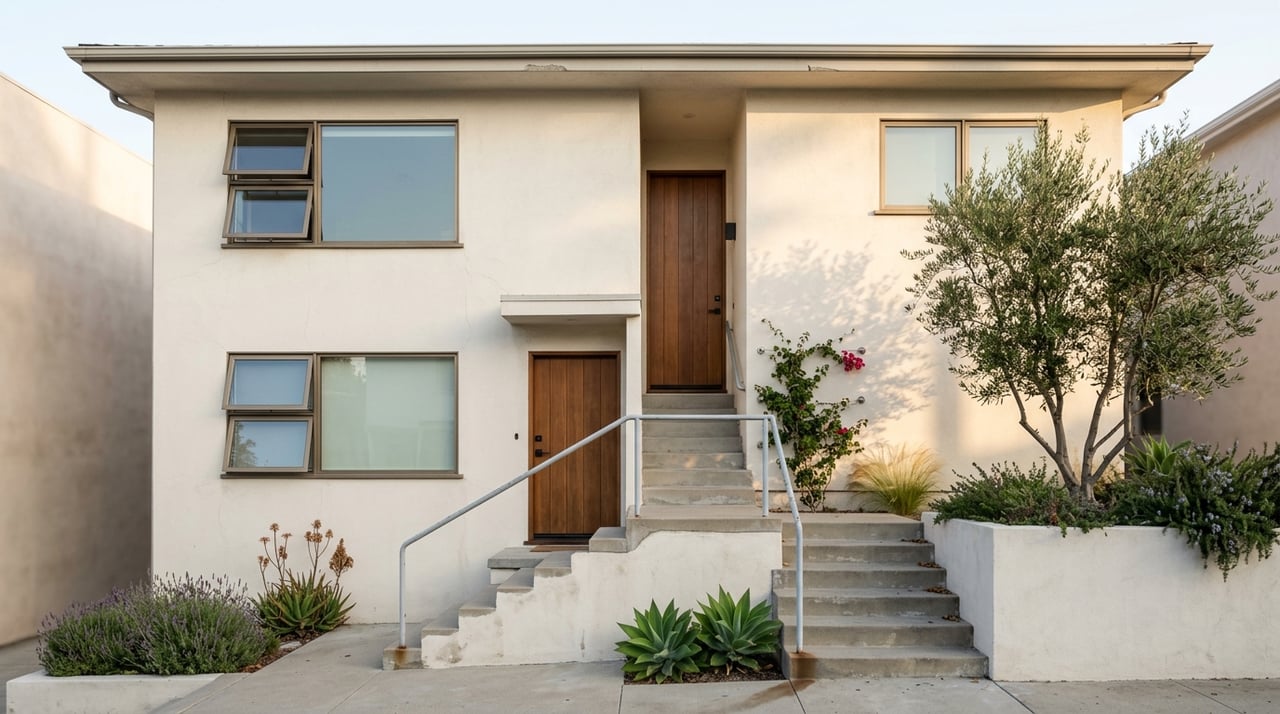
Wondering whether a Silver Lake property has real ADU or duplex upside, or just a good story attached to it? In this part of Los Angeles, the answer is rarely obvious from the curb. If you are buying, holding, or evaluating a property for long-term value, understanding the zoning path, hillside rules, and parcel-specific constraints can help you avoid expensive assumptions. Let’s dive in.
Why Silver Lake Stands Out
Silver Lake is one of the more interesting Los Angeles neighborhoods for gentle-density analysis because it is not built around a single property type or a flat, uniform landscape. The Silver Lake-Echo Park-Elysian Valley Community Plan Area is about 4,579 acres, with roughly 42% designated for residential use, including both single-family and multiple-family residential land.
That mix matters if you are looking for value-add potential. About 14% of the area is zoned single-family, while 28% is designated for multiple-family residential use, which creates a wider range of possible paths depending on the parcel.
Start With the Right Legal Path
In Silver Lake, the first question is not “Can I add another unit?” The better question is “Which legal path applies to this lot?” That answer shapes everything from design options to timelines to parking expectations.
ADUs on single-family lots
For qualifying ADU projects, Los Angeles and the state use a ministerial process. That means the city reviews the project against objective standards rather than making a discretionary land-use judgment.
State guidance also says a completed ADU or JADU application must be approved or denied within 60 days. In practical terms, that makes feasibility more about the property itself than about neighborhood opinion.
On a standard single-family lot in Los Angeles:
- A detached ADU can be up to 1,200 square feet
- A detached ADU can be two stories
- An attached ADU can be up to 50% of the existing primary dwelling
- New detached ADUs generally require four-foot side and rear setbacks
If you are analyzing a single-family property, these basics give you an initial framework. After that, the real work is confirming whether the lot has any overlays, hillside flags, or site conditions that change the picture.
SB 9 for duplex and lot split potential
SB 9 is the main path for adding up to two primary units on a single-family-zoned lot, splitting a qualifying single-family parcel into two parcels, or combining both strategies. State guidance says this path is also ministerial, with limited grounds for denial tied to specific public health, safety, or environmental impacts that cannot be mitigated.
In the right setup, SB 9 can be combined with ADU and JADU rules to reach up to four units in the area typically occupied by one single-family home. Local agencies may generally require up to one parking space per unit, with statutory parking waivers applying in some cases near transit or car-share.
This is where many buyers get tripped up. SB 9 applies to qualifying single-family-zoned parcels, but it does not apply to parcels already zoned for two or more units.
Existing duplex and multifamily lots
If a property already has two or more attached dwellings on one lot, state law treats it as multifamily for ADU purposes. That can create a very different opportunity set from a single-family parcel.
On a lot with an existing multifamily dwelling, state law currently allows at least:
- One conversion ADU within the multifamily structure
- Up to 25% of the existing multifamily units as conversion ADUs
- Up to eight detached ADUs on an existing multifamily lot, as long as the number does not exceed the number of existing units on the lot
For many Silver Lake investors, this is where the strongest upside lives. A duplex or small multifamily property may not fit the SB 9 path, but it can still offer meaningful ADU potential under multifamily rules.
Why Parcel Details Matter in Silver Lake
Silver Lake is not a one-size-fits-all zoning story. Parcel-specific conditions can make two nearby properties behave very differently from a feasibility standpoint.
Hillside rules can change the math
Many Silver Lake streets sit on or near steep terrain, and hillside development standards can become a major part of the analysis. City guidance for single-family hillside development addresses street access, setback and height controls, lot coverage, grading limits, and geotechnical investigation reports for certain grading work.
In other words, a lot may look large enough on paper and still be difficult or expensive to develop in practice. Access, retaining needs, drainage, cut-and-fill, and foundation design can end up being the true constraint.
ZIMAS general plan notes also indicate that residential areas governed by the hillside ordinance are limited to a 36-foot maximum height. That can affect design options, especially on sloped sites where massing and access already require careful planning.
Silver Lake has an important ADU exception
One Silver Lake-specific nuance is especially important. Los Angeles code generally prohibits an ADU on a lot that is both in a Very High Fire Hazard Severity Zone and a Hillside Area, but it explicitly names the Silver Lake-Echo Park-Elysian Valley Community Plan Area as an exception.
That does not mean every hillside parcel works. It does mean some Silver Lake hillside lots may remain eligible for ADUs where similar lots in other areas would not be.
Overlays and footnotes can override assumptions
Silver Lake also includes local overlays and parcel-level notes that can shape the outcome. ZIMAS notes identify, for example, a boundary around Glendale Boulevard and Alvarado Street north of Sunset Boulevard tied to a designated Artist-in-Residence district and a Commercial and Artcraft Overlay District.
City Planning also explains that objective standards may be superseded by specific plans or overlay regulations in the SB 9 context, and waivers may be available when a standard would physically preclude the project. This is why a neighborhood-level opinion is never enough.
Parking Can Help or Hurt Feasibility
Parking is one of the biggest practical questions in Silver Lake because many streets are tight, older homes were built under different standards, and hillside lots can limit layout options. The good news is that ADU and SB 9 rules offer flexibility in the right circumstances.
For ADUs, Los Angeles generally requires one parking space unless an exemption applies. Exemptions can include being within one-half mile of public transit, within one block of a car-share location, in certain historic districts, or when the ADU is part of the primary residence or an accessory structure.
The code also allows ADU parking in yard areas or passageways, including tandem parking where permitted. If a garage, carport, or covered parking structure is demolished or converted for the ADU, no replacement parking is required.
That said, do not assume a transit-related exemption applies just because a property feels close to a commercial corridor. The half-mile test is parcel-specific and should be measured carefully.
Rental Flexibility Matters Too
For buyers thinking long term, rental flexibility is a big part of the value-add story. ADUs can generally be rented, but they usually cannot be sold separately from the primary home.
State guidance also says local agencies generally cannot impose an owner-occupancy requirement on ADUs, except in a limited separate-conveyance situation authorized by state law. For homeowners and investors alike, that keeps more strategy options on the table.
A Practical Silver Lake Screening Checklist
If you are evaluating a Silver Lake property for ADU or duplex potential, a calm and systematic review usually beats quick optimism. Here is the basic order I would use.
1. Verify the parcel facts
Start with ZIMAS and LADBS records. You want to confirm the zone, height district, hillside flags, and any local footnotes or overlay conditions, while also checking what has already been permitted on the property.
2. Identify the correct project category
Decide whether the lot is best analyzed as:
- A single-family lot
- A single-family lot with possible SB 9 potential
- An existing duplex lot
- An existing multifamily lot
This one distinction determines whether you should focus on standard ADU rules, SB 9, or multifamily ADU conversion and detached ADU options.
3. Pressure-test the site conditions
For hillside or tight-lot properties, involve the right professionals early. City guidance points to grading review, geotechnical reporting, and hillside ordinance signoff as important parts of the process where applicable.
If access, drainage, retaining walls, or grading become too costly, the theoretical zoning upside may not translate into a smart purchase.
4. Check tenant and historic issues
Before moving forward, confirm whether tenant status, rent-control exposure, or historic-resource issues could limit your options. State guidance notes that SB 9 does not apply in some cases involving rent-controlled housing, protected affordability covenants, tenant occupancy within relevant lookback periods, or certain historic and environmentally sensitive sites.
5. Look for overlapping advantages
The best Silver Lake opportunities tend to be the ones where several factors line up at once:
- Enough lot area for the intended unit strategy
- A zoning path that clearly supports the plan
- No fatal overlay conflict
- Manageable site conditions for access and grading
- Parking relief or flexibility where applicable
When multiple advantages stack together, the project usually becomes more predictable.
What This Means for Buyers and Investors
If you are shopping Silver Lake for long-term upside, the biggest mistake is treating all single-family homes or all duplexes the same. In this neighborhood, similar-looking properties can have very different feasibility depending on slope, transit distance, overlays, existing structures, and the exact zoning path.
That is why the best opportunities are often not the most obvious ones. A property with modest curb appeal but clean parcel facts may offer better value-add potential than a more polished home with hillside complications or overlay conflicts.
For homeowners, this analysis can also help you think more clearly about future use. A lot that supports a detached ADU, garage conversion, or other compliant path may offer added flexibility for rental income or long-term planning.
The key is to approach Silver Lake with both optimism and discipline. The neighborhood does offer real ADU and gentle-density upside, but the strongest decisions come from parcel-level due diligence, not broad assumptions.
If you want a calm, zoning-aware second opinion on a Silver Lake property, Ravi Sharma can help you evaluate the numbers, the parcel facts, and the realistic next steps. Schedule a free consultation.
FAQs
What makes Silver Lake properties different for ADU analysis?
- Silver Lake has a mix of single-family and multiple-family residential land, plus hillside conditions, overlays, and parcel-specific footnotes that can change feasibility from one lot to the next.
Can you build an ADU on a hillside lot in Silver Lake?
- Sometimes, yes. Silver Lake has a specific code exception that may allow ADUs on some lots in both a Very High Fire Hazard Severity Zone and a Hillside Area, but the project still must meet the rest of the objective standards.
Does SB 9 apply to every Silver Lake property?
- No. SB 9 applies to qualifying single-family-zoned parcels and does not apply to parcels already zoned for two or more units.
How much parking is required for an ADU in Silver Lake?
- Los Angeles generally requires one parking space for an ADU unless an exemption applies, such as certain transit proximity, car-share proximity, historic district conditions, or qualifying conversions.
Are duplex and multifamily properties better for added units in Silver Lake?
- In many cases, they can be. Existing duplex and multifamily lots may qualify for conversion ADUs and detached ADUs under multifamily ADU rules, which can create strong value-add potential.
What should you check before buying a Silver Lake property for development potential?
- Verify the parcel’s zoning, hillside flags, overlays, permitted records, tenant status, and site conditions first, then confirm whether the right legal path is standard ADU, multifamily ADU, or SB 9.
